You might want to bookmark this page, because it’s where you should find everything you’re going to need to be fully prepared for your Process week.
Our enrolment procedure is divided into three main phases: Registration, Pre-course work and Process countdown.
If you can’t find the information you’re looking for in the dropdowns below, our enrolment team are here to help.
The good news is that you have probably done all of these things already and can skip straight to Step 2.
But if you haven’t (or to be sure), click on the dropdowns below for guidance and next steps.
Chosen a Process (or Wait List) Date and paid a deposit
We can’t move forward with your enrolment until we have received a £500 deposit for a Process date
Watched the Negative Love Syndrome video
Bob Hoffman recognised that as children we unconsciously adopt the negative behaviours, belief systems, moods, attitudes and insecurities of our caregivers in order to be loved.
These patterns of behaviour pass from generation to generation, and it is only when we identify and deal with them that the cycle can be broken.
Bob called this ‘Negative Love Syndrome’, and you can watch an introduction to patterns in a short video from our colleagues at Hoffman USA here. We ask that you watch this video before your enrolment call.
(Optional) Read the Hoffman Book 'You Can Change Your Life'
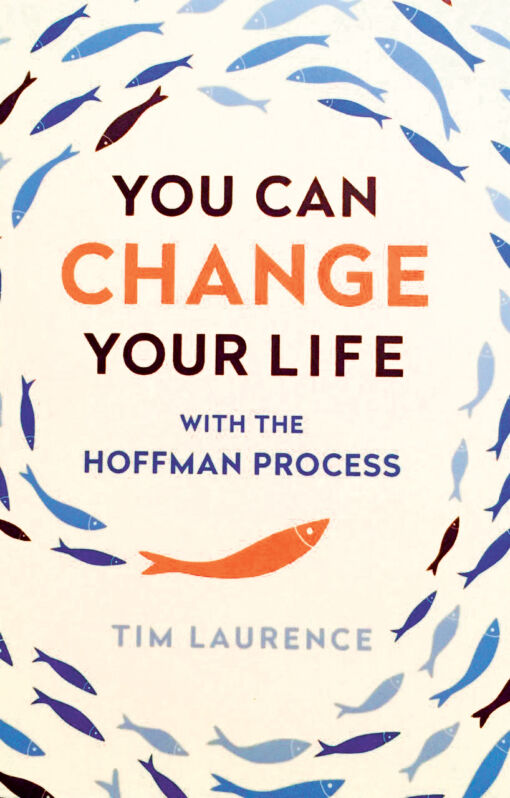 Tim Laurence, founder of Hoffman UK, is the author of the definitive book on the Hoffman Process, ‘You Can Change Your Life’.
It can be helpful to have read Tim’s book when it comes to filling in your pre-course work, as it explains much of the theory behind the Hoffman Process – but this is entirely optional.
If you are registered on an upcoming Process and have a UK address, you can request a complimentary copy of Tim’s book from the Hoffman office.
If you live outside of the UK, or would prefer just a snapshot, you can download a short excerpt below.
Completed an enrolment form and had an enrolment call
Enrolment Form
The information on your enrolment form helps us tailor your enrolment call to your specific circumstances. We appreciate it coming within a few days of you registering, so we can get the ball rolling.
If you haven’t yet completed your enrolment form, we won’t be able to move forward with your enrolment until you have.
Enrolment Call
This preliminary chat with you, in conjunction with the information you’ve shared on your enrolment form, helps us mutually decide whether this is the best time for you to be attending the Hoffman Process. It’s also a chance for you to ask any questions you might have.
If you have completed the enrolment form but not seen a reply, please contact the enrolment team to check on your scheduled call time.
The more honest and open you are with this autobiographical document at this stage, the more prepared you will be for your residential Process week.
Please read through the guidance below thoroughly – you’ll be investing quite a bit of time in completing your pre-course work, and the dropdowns below are designed to help..
We are aware that this work might elicit some strong emotions for some people – if you find that you need support at any point while you are filling in your pre-course work, please call the office and let us know.
The pre-course document: Instructions and download
The pre-course takes around 8-10 hours to complete on average.
You might find it helpful to step away and come back with fresh eyes a few times. Please remember to save your work as you go.
The link to download the pre-course work template is below.
Please save a copy of the document to your device before you start to work on it, and be sure to save it regularly as you go along.
This form does NOT save automatically.
It can take several hours to complete, and making sure you have a saved version from the outset can help prevent wasted time and effort.
How do I approach the pre-course work?
Your pre-course work is the first real exploratory step in your Process journey. You will refer to it during your residential week.
The more honest and open you are with this autobiographical document at this stage, the more prepared you will be for your retreat.
Our intention is that this material supports your process and preparation – not simply to inform us, but to deepen your own insight as you approach the course.
You may have felt the need to be different from your parents, or to rebel against them, so certain behaviours may not appear that obvious to you at first.
To have the very best experience from Hoffman, we suggest you are able to see your parents objectively, as human beings who, like all of us, made some mistakes.
Start from the assumption that your parents wanted the best for you. We do not want you to blame your parents, neither do we want you to keep blaming yourself or others. We simply ask that you understand how you might have taken on certain negative behaviours from your parents and/or surrogates.
We recognise that people arrive at Hoffman with a wide range of lived experiences shaped by race, disability, gender, sexuality, class, culture, and more. While not every question on the pre-course work may feel relevant, we invite you to reflect on what feels meaningful to your journey.
The pre-course work is not a presentation, an essay or a memoir – it’s an exercise in self-exploration. You’re not being tested on spelling, grammar or vocabulary. Try to follow your instincts, by using your own words and phrases. Don’t overthink it! You’ll have the chance to develop and expand your reflections more during the week.
Your pre-course work should be emailed to the enrolment team four weeks before the start of your course.
It will be read by one of your Hoffman Process facilitators, and we will let you know if they have any questions. We delete any copies stored by us the week following your retreat.
If are on a wait list, the sooner you return your pre-course work, the greater your chances of being offered a place if one becomes available.
If you’ve booked nearer to your course start date, or you don’t think that you are going to be able to complete your work by the deadline, please talk to the enrolment team.
The pre-course document: Instructions and download
The pre-course takes around 8-10 hours to complete on average.
The link to download the pre-course work template is below.
Please save a copy of the document to your device before you start to work on it, and be sure to save it regularly as you go along.
This form does NOT save automatically.
It can take several hours to complete, and making sure you have a saved version from the outset can help prevent wasted time and effort.
You might find it helpful to step away and come back with fresh eyes a few times.
I need more time to do my pre-course work – what do I do?
Your pre-course work is referenced throughout the course, so you do need to complete it. It’s an important part of your Process preparation.
The reason we ask for it back four weeks in advance is because it’s firstly checked in-house by our enrolment team and then passed on to your Hoffman facilitator. They’ll need time to read it, prepare to meet with you and identify any areas where you may need additional support during the Process week. Your facilitator may also have questions or areas where they’d like you to clarify things – which all takes time.
It’s quite normal to have a reaction to some of the questions in the pre-course work – ranging from resistance to ambivalence. Something important is surfacing.
If there’s a genuine reason why your work is going to take longer than you’d anticipated, give us a call. The enrolment team will be much happier to grant an extension if we’re in communication with you, and may even suggest moving to a later course as an option (a moving fee will apply at this point).
How detailed should my answers be?
If you can keep your answers to a paragraph or two with the most important details, that’s ideal – quality and depth is more important than quantity. The boxes on the form will usually provide more than enough space for the length of answer we’re expecting to receive from you.
Can I use AI to help with my pre-course work?
We ask that you try to complete the pre-course work as honestly and openly as you feel able, and without assistance from AI. Taking the time to reflect on your answers and choosing words and phrases that you would use yourself are an integral part of the experience. There’s no need to worry about grammar or spelling; expressing yourself freely and authentically is the main goal.
Can I use my own words when it comes to listing the negative patterns?
Of course! There may be others that come to mind when you use your own words. We’re just asking for 10 patterns (or more) you recognise in yourself that you can trace back to each of the significant people in your childhood.
What do you mean by surrogates in the pre-course work?
A surrogate parent is somebody who had a significant parental role, including raising you and disciplining you before the age of 13.
A surrogate could be a step-parent, grandparent, nanny – even a boarding school.
I didn't know my biological parent(s) - What answers should I put?
It is perfectly normal to have no memory or thoughts about an absent biological parent. Perhaps you were adopted and didn’t know your biological mother or father, or maybe a parent died before before you were born, or left when you were very young.
It’s still possible to look at the impact of that on your childhood and how it affects you today. Even if they had no other choice, their negative patterns for you might translate as abandoning, rejecting, irresponsible etc – and you can work with those patterns as a starting point.
We have an additional worksheet to support people exploring the impact of being adopted, fostered or having an absent parent. Please ask the enrolment team for more details if this applies to you.
I’m struggling with patterns for my parents in the tick-box section. Is this normal?
On a day-to-day basis you probably wouldn’t be connecting some of these words to your parents, so some people can find it difficult to get started on this part of the exercise.
Remind yourself that nobody’s going to see this work apart from you and members of the Hoffman team. The best thing to do is to look at the suggestions and (without overanalysing them) tick the boxes that have an element of truth about them. You won’t be held to it, but you need to get the connections flowing.
It could also be that you have rebelled against some of your parents’ traits, so don’t forget to look at this.
What happens if I can’t recall scenes from my childhood?
Don’t worry. It’s quite common for us not to remember much detail from our childhoods. Once you’re at the venue and in a retreat atmosphere, you will find that memories surface and the brain has a way of bringing back scenes in context.
In the meantime, take some time for reflection in a quiet place that’s free from distraction. Simple things like looking at childhood photos, talking to siblings or imagining a walk around your childhood home can bring memories back.
If these experiences were positive for you, you may not need to include them as a surrogate.
However, some people have a sense that their boarding school (for example) demonstrated negative behaviours that had an impact on them – controlling, withholding affection, punishing, bullying or abandoning. This may have resulted in negative attitudes towards authority, not fitting into a system, not being accepted by peers or in being bullied or bullying others.
We have an additional worksheet to support people exploring the impact of spending time at boarding school, in foster homes or residential children’s care. Please ask the enrolment team for more details if this applies to you.
My parent/surrogate was perfect and I feel guilty even thinking about them negatively
It isn’t disloyal to be able to see your parents objectively, as flawed human beings who may have been trying their best, but weren’t perfect – because nobody is!
However well-meaning they were and however happily you recall your formative years, your parents’ behaviours (both good and bad) will have impacted on you during childhood, and this is what you can explore on the Process.
Try working with your guilty feeling as one of your own negative traits. Is feeling overly responsible one of your patterns? People-pleasing? Denial? Fear of authority? Once you’ve identified a pattern in yourself, try connecting it back to either or both of your parents/surrogates.
I am completely different from my parents
It could be that you have turned or ‘rebelled’ against your parents’ behaviours and messages. Do remember to consider this aspect.
For instance, if your father was very hard working, you may have lost your motivation, or if your mother was very lazy and passive, you may have become very controlling. If you have become ‘not your father’ or ‘not your mother’, what effect has this had on you and those around you?
I can’t remember a scene when I felt anger towards a parent
Try and think of a time when, if not exactly angry, you were annoyed, frustrated or felt unheard by your parents. Anger can seem like a strong word if it is something that wasn’t allowed or expressed in your family, so thinking of a scene where you felt frustrated could be easier.
The reason we ask you to think of a scene is that if a similar occurrence happened now – for example, feeling unjustly accused or ignored – it could bring up the same feelings that you had as a child.
Try to take your parents off any pedestal you might have them on and see them as human beings who did their best, but weren’t perfect – because nobody is! Imagine for a moment where they learned to behave.
Being angry is an entirely natural response for a child and highlights a child’s need for healthy independence. Was that type of free expression discouraged in your household?
My mother and father were very different when I was a child
We are looking at the effects that negative patterns have had on you before the age of puberty (approximately 12-14 years old).
Even though your parents may have changed, this negativity is what the Hoffman Process aims to resolve. We all store emotional memories that can hijack our normal, rational responses. Witness how people behave around their parents, no matter what their age.
Please keep an open mind as we explore the effect of how you internalised (and perhaps forgot) your early conditioning.
Additional pattern exploration
If your enrolment form or pre-course work reveals a focus on patterns related to a specific issue, you are welcome to explore these now via the links below. We will also have copies of these for completion during the Process if they become more relevant as you move through your Process week.
Below you will find a list of the explorations we currently offer. Please note that a copy of the information you provide will be sent to us as well as to you on submission, so please only complete the explorations that the team have suggested you do.
Absent parent patterns – for those who wish to explore the impact of having an absent, deceased or abandoning parent.
Adoption patterns – for those who wish to explore the impact of adoption
Boarding school / residential care patterns – for those who have patterns related to their time a boarding school, in foster homes or residential care and wish to use those as a surrogate on their Process.
Compulsive behaviour patterns – for those whose parents or surrogates may have had issues with a compulsive behaviour.
Compulsive behaviour exploration
Military patterns – for those who grew up with parents in the Forces.
Religion and Spirituality patterns – for those who grew up in a strongly religious environment, overtly spiritual household or faith-based community.
The dropdowns below contain frequently-asked questions about the practicalities of the week, information you will need about travelling to your Process venue and a checklist of what you need to bring.
You will also find information that you can share with your nominated contact(s) for the week – we call this the family letter.
If you have any questions about travel, packing or other practicalities, the Hoffman office will be able to help
How do I prepare myself physically to get the most out of the week?
In order to gain the most from your Process, we ask that you refrain from alcohol and from taking any substances (which may affect your concentration, moods or your ability to access your feelings) for at least two weeks before the course starts and throughout the duration of the course.
Items to bring to the Hoffman Process
Your pre-course work
You will be referring back to this during the week, so please bring a printed copy of the patterns pages 21-57 with you. If you submitted any additional patterns lists, don’t forget to print these off too. If you don’t have access to a printer, please call or email the office by 5pm on Thursday so we can print a copy for you.
Photograph of you as a child
Please bring a photo of yourself as a child, either an original or printed copy.
Mementos of your parents
These are objects that will help stimulate a positive memory of each of your parents. You could bring a photograph (a copy is fine), a small personal token (eg book, ball, scarf, locket), an image from the internet that represents something (a familiar view, a hobby) or a drawing you have made. We invite you to bring one or two mementos for each parent if possible.
A wristwatch (not a smartwatch), as you will not have use of your phone. If you don’t have one, we do carry a limited number of watches to borrow. You will each be lent an alarm clock to use during the week.
Bag identifier
You will be given a canvas Hoffman bag for your use throughout the week. Please bring something to tie around the handle that will identify it as yours, e.g. a scarf, handkerchief, ribbon, hair tie etc.
Closed bottle/ lidded cups
Our venues only allow drinks to be transported to the group rooms and bedrooms in closed bottles or lidded cups. We will supply a closed bottle suitable for cold and hot drinks to use during the week and to take home with you.
Indoor shoes or slippers
The Vedanta requests that you change into clean indoor shoes or slippers when entering the property from outside. Please pack these at the top of your suitcase so they are to hand on arrival.
We recommend that you bring the following items for your comfort and convenience:
Please be aware:
Why do I need a childhood photograph and what happens if I don’t have one?
We ask you to bring a photo or photos of yourself in the years up to puberty. This photo is simply there to act as a physical representation of you as a child. The photo remains safe and in your possession.
If you struggle to find a photograph, you may try drawing an image of yourself doing something you enjoyed as a child.
What do you mean by mementos of my parents?
At a certain point in the Process, we ask you to look at your parents and remember them vividly in a positive light. It can be helpful to have a physical representation of them that makes this connection more real.
You could bring a photograph (a copy is fine), a small personal token (eg book, ball, scarf, locket), an image from the internet that represents something (a familiar view, a hobby) or a drawing you have made. We invite you to bring one or two mementos for each parent if possible.
Information that you can copy and paste to share with your emergency contact(s) for the week.
Please feel free to share as little or as much as you feel comfortable with:
We have recommended that your partner, friend or family member who is about to participate in the Hoffman Process gives the following information to you.
The Hoffman Process is a week-long retreat that focusses on resolving issues and patterns of behaviour with the aim of establishing a new, positive outlook.
To help accomplish this while at the Process, participants will be asked to examine their past, take part in interactive exercises, guided meditations, anger release, journal writing, and other exercises to promote self-acceptance, forgiveness and personal growth.
The course takes place at a retreat centre where around participants and facilitators stay for the week of the course.
In order that they can fully focus on the work at hand, we ask that participants refrain from contacting their families, friends or business associates during the week of the course. We also recommend that participants spend the two days immediately following the course on a personal retreat to complete post-Process assignments.
You may notice a period of adjustment in the days and weeks following the course while your family member or friend is integrating insights and knowledge gained into his or her daily life. During that time, we encourage you to be open and honest about your own feelings, and to welcome whatever your family member wishes to share about his or her new experiences. We believe that you will notice a positive difference.
We would also point out that, as a result of the shared experience, the course group will form a bond and will often stay in close contact following the course. The frequency of contact usually becomes less as time goes by. The initial group support is important and will hopefully be of long-term benefit in your family relationships.
If you have any concerns or questions, please do not hesitate to contact the Hoffman Process enrolment team (9am-5pm Monday to Friday): +44(0) 1903 88 99 90 or email enrolment@hoffmaninstitute.co.uk
If you would like to read more about the Hoffman Process, the book ‘You Can Change Your Life’ by Tim Laurence will tell you more specifically about what techniques are involved. Please call the office for a copy, or click here to download an excerpt.
We also hold weekly informal Information Webinars via Zoom. These sessions are free and are a wonderful opportunity to find out more. To see dates/times and to book a place click here.
Please bear in mind that the emergency phone may only be checked between course sessions, so it may take a short while for your message to be received and/or your call returned. Please only use these numbers in a genuine emergency.
Emergency on site mobile numbers during the Process in UK:
The Vedanta: 07879 270 378
Broughton Sanctuary: 07391 439 211
Thank you!
The Hoffman team
Can I speak to my children or contact work during the Process?
We ask you to refrain from any contact with the world outside in any way during the Process. This includes phone calls, email, social media, newsfeeds etc. This is to help you focus on the work that you are doing.
If it is imperative that you make contact with your children or work during the week, this is sometimes possible by pre-arrangement, but will ultimately be at the discretion of your Process facilitator.
Arrival and directions: The Vedanta
Lincoln Road, Branston, Lincolnshire, United Kingdom, LN4 1PD
Venue phone: +44 (0)7563 373 266
Process phone: 07879 270 378
For SatNav, the postcode for The Vedanta is LN4 1PD
The Vedanta is set in 75 acres of grounds, near to the small village of Branston, in Lincolnshire. Surrounded by rolling countryside and historic market towns, it is only around a ten minute drive south from the centre of Lincoln.
The drive from London takes around 3.5 hours via M25 North, then M1 to Lincoln.
The Vedanta has a car charging points available for their guests for an additional cost. If you are driving an electric car, please check directly with the venue to enquire about the fee and to make sure they will be available during your course dates.
The nearest train station is Lincoln (the venue is approximately a 20 minute taxi ride from the station). There are direct trains each day from London King’s Cross that take around 2 hours. If your journey requires you to change at Newark Northgate Station, rather than changing trains to Lincoln and getting a taxi, a faster option might be to get a taxi from Newark Northgate Station directly to the venue (approx 40 minutes).
To pre-book a taxi, you might like to try A2B Lincoln (01522 533433) or Handsome Cabs (01522 545352). Uber is sometimes the best option if the local companies are busy.
The nearest main airport is East Midlands, which is around 1hour 45 minutes by car, or offers shuttle services to connecting trains. Heathrow airport is around a 3 hour drive (via M25 North, then M1 to Lincoln). Humberside airport has flights to/from Amsterdam and a couple of other destinations. It is about 50 minutes by car/taxi (M180, then A15 to Lincoln). If flying to London Stansted airport, the train to Lincoln takes 3h 24m with one change at Peterborough.
Arrival and directions: Broughton Sanctuary
Broughton Hall Estate, Skipton, Yorkshire, BD23 3AE
Venue phone: +44 (0)1756 799 608
Process phone: +44 (0)7391 439 211
For SatNav, the postcode for Broughton Sanctuary is BD23 3AE
Broughton Sanctuary is situated at the gateway to the Yorkshire Dales. The main road that runs by the estate is the A59 and the nearest town is Skipton. The venue is approximately 1 hour by car from Leeds, 1.5 hours from Manchester and around 4.5 hours from central London.
Broughton Estate has a couple of car charging points available for their guests for an additional cost. If you are driving an electric car, please check directly with the venue to enquire about the fee and to make sure they will be available during your course dates.
Trains run frequently from Skipton railway station to all parts of the UK. There is a fast train to and from London King’s Cross/St Pancras that takes around 3 hours with one change. Manchester Airport is 2.5 – 3 hours with one change. There is a taxi rank at Skipton station. The ride to Broughton Sanctuary takes about 10 minutes, costing approximately £10. Local taxi firms include: Station Taxis – 01756 700777; Skipton & Craven Taxis – 01756 701122
If travelling by train to the venue, Manchester airport has the fastest/easiest rail journey to Skipton. By road, Leeds Bradford is approximately a 45 minute drive. Liverpool and Manchester airports are each about 1.5 hours.
Why should I spend the weekend following my Process free from commitment?
Experience has shown that having a weekend or even just the Friday night free of commitments can help deepen your Process experience as well as help you adjust to the fast-paced world outside the retreat venue. It will also help you to integrate what you have learnt and to finish any assignments, if applicable.
Post-Process accommodation: The Vedanta
Below is a list of places to stay at the end of your Process that are close to The Vedanta. You might also find searching for local towns like ‘Lincoln’, ‘Newark’ or ‘Grantham’ on accommodation sites like AirBnB or Booking.com helpful.
Please note that the Hoffman Institute can’t be held responsible for any arrangements that you make with third parties once your time with us has finished.
Hotel/B&B |
Address |
Contact |
Approximate Room Price |
| Premier Inn, Canwick | Lincoln Road, Canwick Hill, Lincoln LN4 2RF | 0333 321 1092 Premier Inn Canwick |
£85 |
| The Dower House Apartments | Montagu Rd, Canwick, Lincoln LN4 2RW | 07835 144489 The Dower House Apartments |
£300 for 2 nights |
| Washingborough Hall Hotel | Church Hill, Washingborough, Lincoln LN4 1EH | 01522 790 340 Washingborough Hall |
£150 |
| Clarkes Farm B&B | 65 High Street, Heighinton, Lincoln, LN4 1JS | 07786 852 374 Clarkes Farm B&B |
£120 |
| Hare and Hounds | The Green, Fulbeck, Lincolnshire, NG32 3JJ | 01400 273 322 Hare and Hounds |
£100 |
| Rose Cottage B&B | 40, High Street, Brant Broughton, LN5 0SL | 01400 275 129 Rose Cottage B&B |
£75 |
| The Lincolnshire Poacher Inn | 53 High Street, Metheringam, Lincoln, LN4 3DZ | 01526 320 556 The Lincolnshire Poacher Inn |
£75 |
| Brills Farm B&B | Norton Disney, Lincoln, LN6 9JN | 01636 892 311 Brills Farm B&B |
£120 |
| Doddington Hall Holiday Cottages | Main Street, Doddington, Lincoln, LN6 4RU | 01522 699 162 Doddington Hall Cottages |
£Various |
| The Lions B&B | 55 London Rd, Newark NG24 1RZ | 01636 643 880 The Lions B&B |
£118 |
| Belton Woods Hotel | Gonerby Grange Lane, Belton, Grantham, NG32 2LN | 01753 752 900 Belton Woods Hotel |
£125 |
| The Rest Hotel | 55a Steep Hill, Lincoln LN2 1LR | 01522 247 888 The Rest Hotel |
£100 |
| The Castle Hotel | Westgate, Lincoln LN1 3AS | 01522 538 801 Castle Hotel |
£120 |
Post-Process accommodation: Broughton Sanctuary
Below you’ll find a list of places to stay at the end of your Process that have been suggested to us. Please note that the Hoffman Institute can’t be held responsible for any arrangements that you make with third parties once your time with us has finished.
Broughton Sanctuary offers an ‘Extend your Stay‘ package to Hoffman participants who would like to remain on the Broughton Estate once the Process has ended. You can find out more about that offer here.
To visit the Skipton Tourist Information website, click here, or for the Visit Skipton website, click here
| Hotel/B&B | Address | Telephone Number | Approx Room Price |
| Travelodge Skipton | A65/A59 Roundabout Gargrave Road, Skipton BD23 1UD | 0871 984 6177 www.travelodge.co.uk |
£47 |
| Herriots Hotel |
Broughton Road, Skipton BD23 1RT
|
01756 792781 www.herriotsforleisure.co.uk |
£95 |
| The Coach House | 1 Raikes Road, Skipton BD23 2PB | 01756 799688 | £126 |
| Premier Inn Skipton North Gargrave |
Hellifield Road, Gargrave, Skipton BD23 4AJ | 0871 527 8980 www.premierinn.com |
£69 |
| The Coniston Hotel | Coniston Cold, Skipton BD23 4EA | 01756 748080 www.theconistonhotel.com |
£137 |
| The Tempest Arms | Elslack Lane, Elslack, Skipton BD23 3AY | 01282 842450 www.tempestarms.co.uk |
£80 |